Following the FIFA World Cup 2026, I noticed that most people don't like the hydration breaks. My feeling is that they slow the gameplay down and break the momentum of the winning team.
So here is a data-driven analysis of the hydration break.
The hydration break is called by the referee roughly after the 22nd and 67th minute. It still counts as normal gameplay time and takes about 3 min.
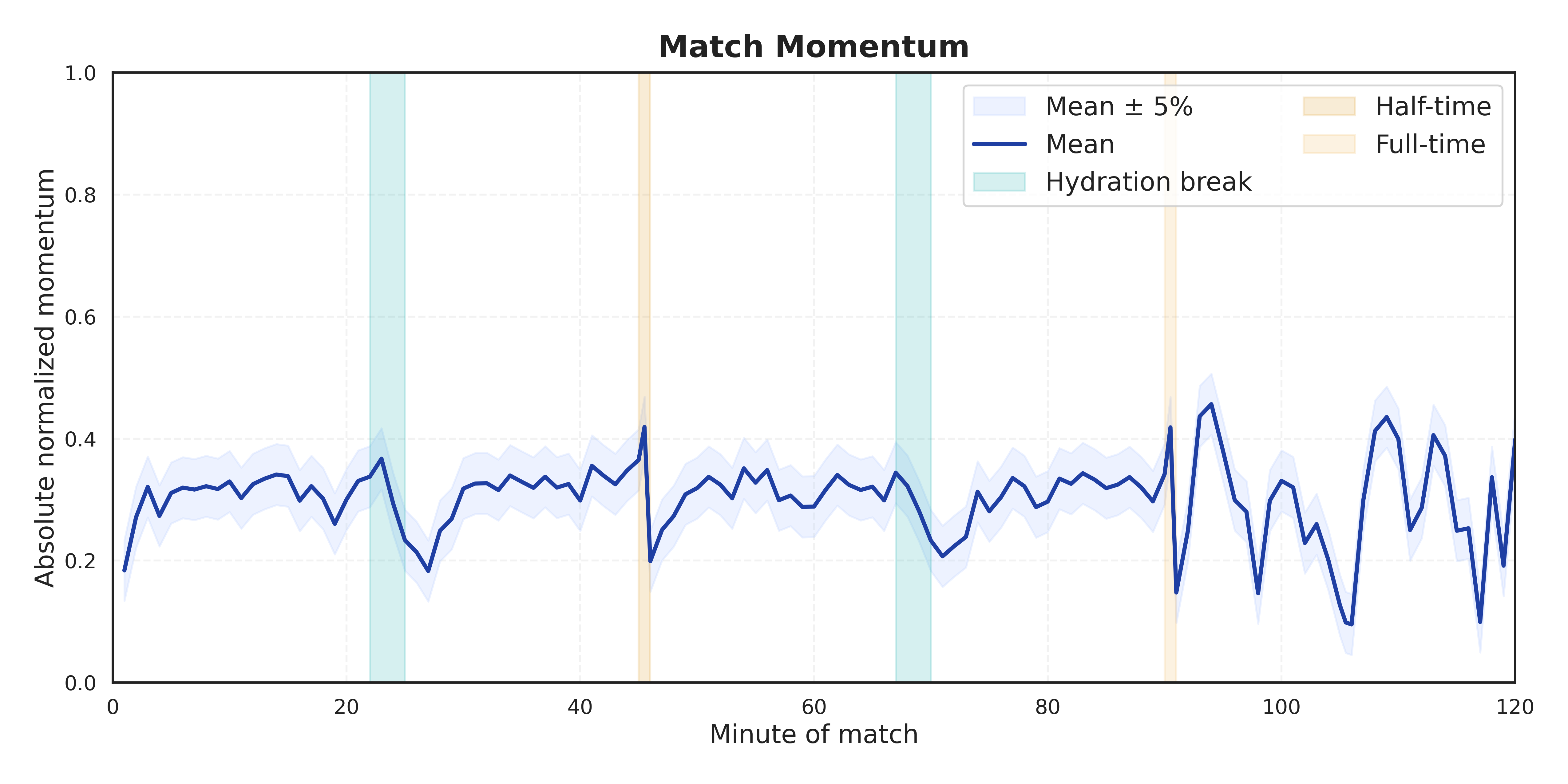 The figure above shows the match momentum of the play for the full length. We can clearly see dips in momentum for each hydration break as well as the half- and full-time breaks. The momentum is shown in absolute value here, so a dip in momentum means that the team with the upper hand loses its advantage and the game is more balanced. We can also see that the extra time is mostly very chaotic with a lot of changes in momentum.
For the half- and full-time breaks, we can also see that the momentum just before the break increases. This makes sense as the teams give all they have just before the break to decide the game here (and they know they can rest soon). The same can not be observed for the hydration breaks because these are not pre-defined times but rather unexpectedly announced by the referee.
So judging from this, we can see that the hydration break has a similar impact on the momentum as normal half- and full-time breaks.
Instead of looking at the momentum, we can also look at the number of events like goals, assists, and cards:
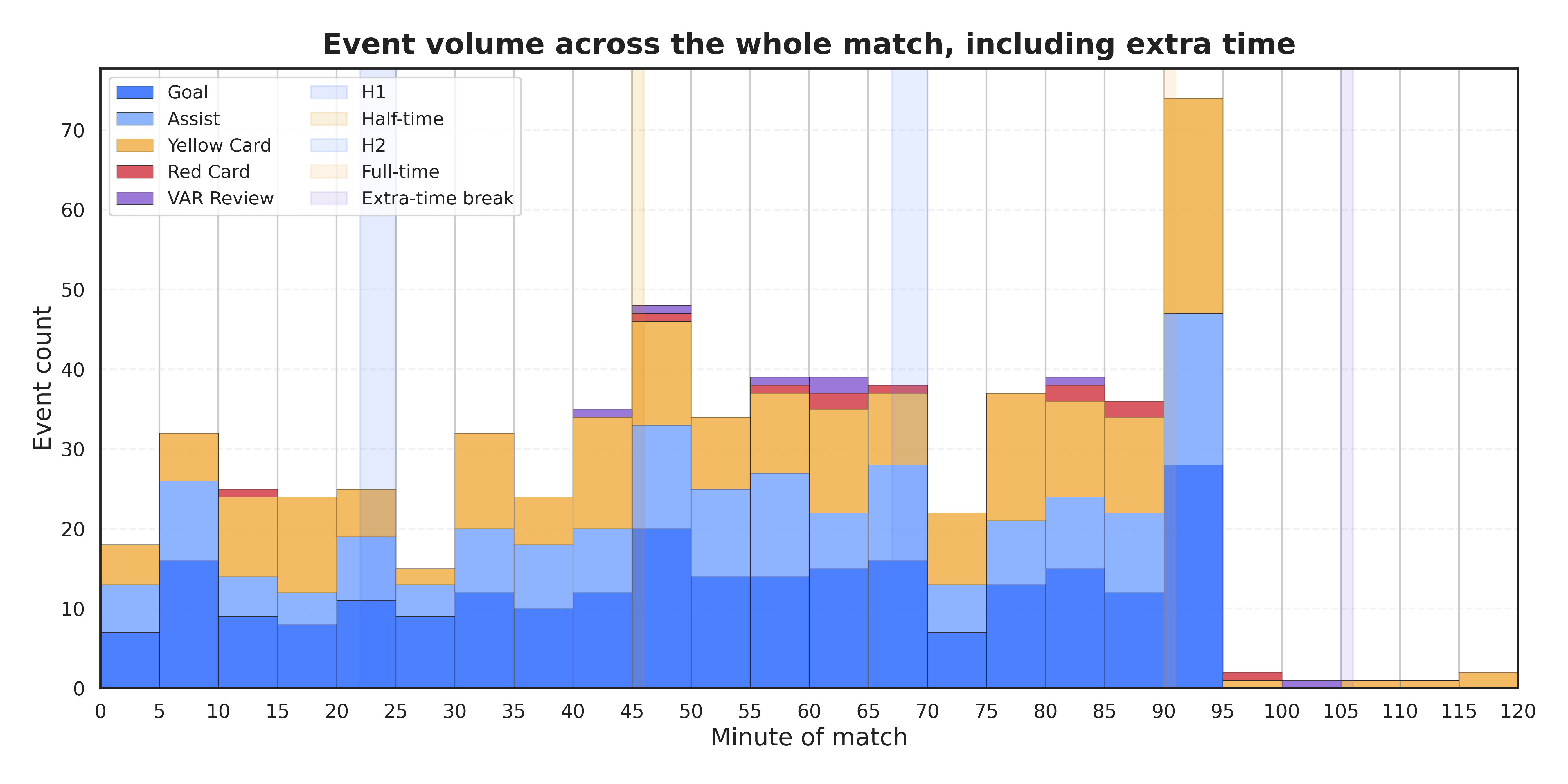
From this figure, we can see that there is a difference between the hydration and normal breaks. As previously noted, we can see an increase of events towards the end of the 90 minutes. We can also see that teams are more likely to score goals just after the half-time break. Presumably because the coach gave them valuable tips, or they are just recovered and know what to expect in the opponent's style of football.
The hydration breaks, however, see a significant drop in events just after the break. This shows that compared to the normal breaks (they don't see this drop), the hydration breaks really disrupt the game flow and lead to fewer events happening.
Also interesting to see is that the first hydration break does not lead to fewer goals shot just after it; however, the second hydration break has a big drop in goals right after. This difference in effect of the first and second hydration break could indicate that players get more tired over the time of the match and therefore are more influenced by game interruptions.
I couldn't find any free and available data on the exact moment the hydration breaks were called. In my experience, they are not called exactly at minute 22. So there might be some noise in the data of games that had the break at minute 28 instead of 22, for example.

[ Comments ]
Try commenting something else.
Loading comments...